
How ReVolt Battery Restoration Works
Most dead lead-acid batteries are not chemically ruined. They have lost plate surface area to sulfate deposits, or developed small, low-resistance short circuits between plates, both of which a controlled electrical pulse can often reverse. ReVolt Research builds on this century-old principle of battery rejuvenation with a proprietary bi-phase pulse method, refined against the field data described on the efficacy data page.
Three ways a battery fails
Nearly every dead or weak 12-volt lead-acid battery falls into one of three conditions: it will not accept a charge, it will not hold a charge once charged, or it runs weak under load even though it appears charged. ReVolt technology is built around correcting these three conditions specifically, rather than simply pushing more current into a battery the way a conventional charger does.
The bi-phase pulse method
Inside a lead-acid cell, performance depends on how much plate surface area is actually available to react with the electrolyte. Sulfate crystals accumulate on the plates over time, covering that surface and reducing it. Left long enough, particularly through extended periods sitting uncharged, those crystals can harden and cause the battery to resist charging altogether.
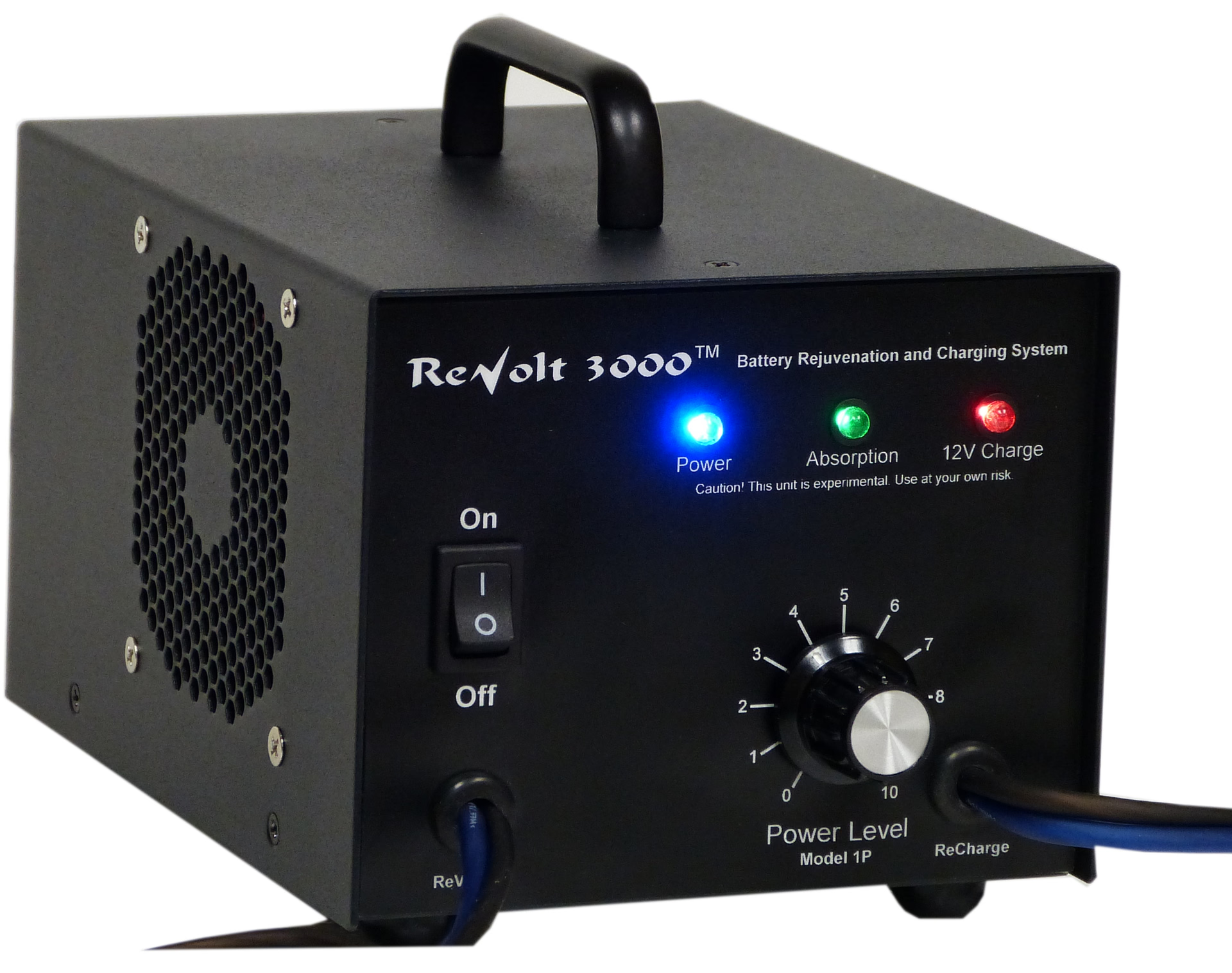
The ReVolt method applies a proprietary bi-phase electrical pulse, alternating in a pattern designed to both break up sulfate crystals and clear the small, low-resistance zones that can form between plates in a contaminated cell. A single unit combines this revitalizing pulse with a no-fault charging function, and the two can run at the same time on different batteries.
Cell spiking for multi-cell batteries
A 12-volt lead-acid battery is made of six individual 2-volt cells wired in series, so one failed cell renders the whole battery useless even though the other five are fine. Where a cell has failed outright, the technology can deliberately short, or “spike,” that one cell out of the circuit. The result is a functioning battery at a reduced voltage, for example a 10-volt battery from a 12-volt case, which is still useful in many off-grid, agricultural, or backup applications where the exact voltage is not critical.
What the technology cannot do
ReVolt systems cannot repair a battery that is physically broken or missing the chemical elements it needs in every cell: a cracked case, cells that have dried out completely, or cells contaminated in a way that blocks the electrochemical reaction outright. The method works by restoring plate surface area and clearing minor internal shorts, not by replacing chemistry or repairing physical damage.
Reliable recovery of some of the most severely neglected batteries, sulfated hard from years of sitting outside with no attention, tends to bring them back to somewhere around 80% of their original capacity: on par with a battery that has already seen roughly two years of normal use, rather than a brand-new one.
“I had a successful run with the ReVolt this weekend. The battery in my van is nearly 10 years old, and I’m surprised it has lasted this long, because my van mostly sits in the driveway. On Friday evening the resting voltage on the battery was about 12.3, and I put the ReVolt on it. I only had an older 5 ball hygrometer, and it was floating 2 of the 5. By mid-day Saturday it could float 3 balls, and by Sunday afternoon, it was floating 4. The lightly rested voltage was about 13.3.”
This is not a new idea dressed up: simple pulse-based battery rejuvenation has been practiced for close to a century. An early, deliberately crude test of the concept using nothing more than a car headlight bulb and a diode, run as a baseline before the current method was developed, recovered only about one in five batteries. The development history behind the current bi-phase method, and the 10,000-battery record that backs its current performance, are covered on their own pages.